Geometry (Shape) for year 5 (age 9-10)
Properties of 2D and 3D shapes, translations, reflections, using co-ordinates and calculating angle.
Accuracy is a key word in the Programme of Study for Geometry in Year 5. Children will be expected to draw lines accurately, to the nearest millimetre.
Measuring angle is also an important part of this year’s work as well as calculating angles from given information.
In full the new Programme of Study is:
Properties of shapes
Pupils should be taught to:
identify 3D shapes, including cubes and other cuboids, from 2D representations
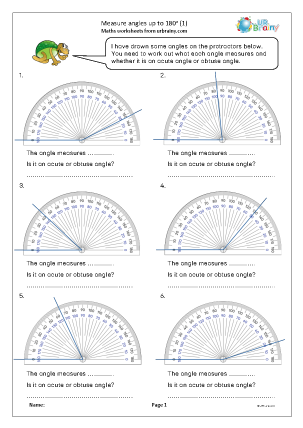
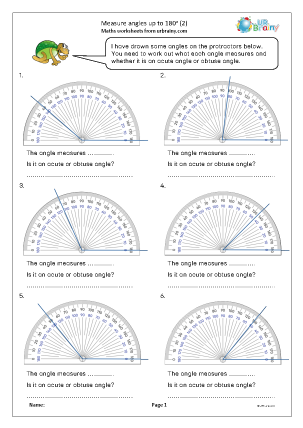
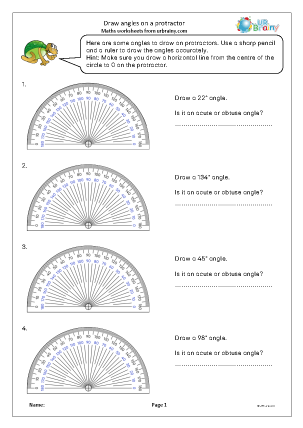
know angles are measured in degrees: estimate and compare acute, obtuse and reflex angles
draw given angles, and measure them in degrees (°)
identify:
angles at a point and one whole turn (total 360°)
angles at a point on a straight line and ½ a turn (total 180°)
other multiples of 90°
use the properties of rectangles to deduce related facts and find missing lengths and angles
distinguish between regular and irregular polygons based on reasoning about equal sides and angles
Position and direction
Pupils should be taught to:
identify, describe and represent the position of a shape following a reflection or translation, using the appropriate language, and know that the shape has not changed
2D and 3D Shapes


Angle


Further Shape


Subscribe to our newsletter
The latest news, articles, and resources, sent to your inbox weekly.


© Copyright 2011 - 2026 Route One Network Ltd. - URBrainy.com 14.0.29