A selection of our very best maths resources entirely free, updated each month.
Available for everyone, even expired accounts.
Autumn
Spring
Summer
Adding several numbers. A useful tip is to look for pairs of numbers that make 10 and do that part of the sum first.
Taking 15, 16, 17 or 18 from 2-digit numbers. The easiest way of doing this is by taking a whole ten and adjusting.
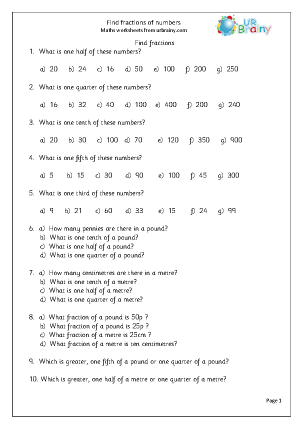
Finding fractions of numbers. Working with halves, quarters, thirds and tenths. Remember, to find one fifth, divide by 5.
Without using paper and pencil practise adding three small numbers as well as adding two 2-digit numbers.
More written addition; adding up to four numbers as well as 4-digit numbers and decimals.
The easiest way to read large numbers is to think of them as blocks of three, starting with hundreds, tens and ones.
If it?s been a cold winter everyone will be used to using negative numbers!
An introduction to square numbers and the number patterns associated with them.
Rounding very large numbers to the nearest ten thousand and rounding populations to the nearest million.
When adding using decimals it is very important that the decimal points should line up under each other. If the sum also involves whole numbers it is a good idea to put a decimal point after the whole number followed by a zero.
Multiplying whole numbers and tenths by a single digit. When multiplying numbers like these it is a good idea to start with the whole number or units.
Here are sets of axes with positive numbers on the y-axis, but positive and negative numbers on the x-axis.
Showing 625 to 636 of 3872 results
The latest news, articles, and resources, sent to your inbox weekly.
© Copyright 2011 - 2025 Route One Network Ltd. - URBrainy.com 12.3.1