Measuring and Time Worksheets for Year 4 (age 8-9)
Measurement and time including the 24 hour clock.
Children entering Year 4 should be able to read and write the time using an analogue clock and be familiar with digital clocks. However, there will be many who are still uncertain about this and will need extra practice.
In Year 4 reading, writing and converting time between analogue and digital clocks continues and children should get plenty of experience with reading and writing using both the 12 hour clock and the 24 hour clock. An important part of this is to display the time correctly using a.m. or p.m. for the 12 hour clock, but not with the 24 hour system.
A major part of the year’s work will involve solving problems converting times. These might be:
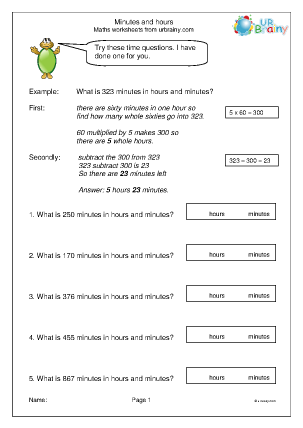
- from hours to minutes
- from minutes to seconds
- from weeks to days
- from years to months.
A good working knowledge of how many minutes there are in an hour, how many hours in a day etc. is needed for this. There are plenty of other practical activities that can be done to help with understanding time. TV guides are a useful resource to work out lengths of programmes. Stop watches and stop clocks can also be used to find out how much time is spent on an activity or how long a task takes.
We have many excellent pages on all the above subjects, to be found in our Year 4 Measuring and Time category.
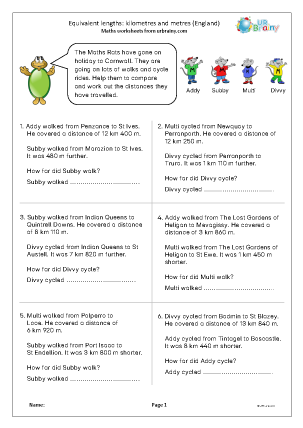
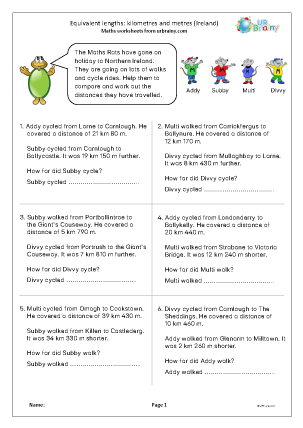
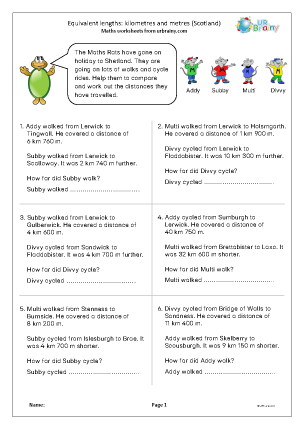
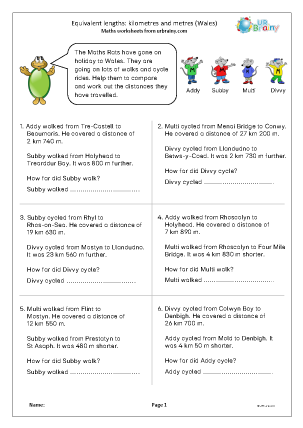
Measurement of length


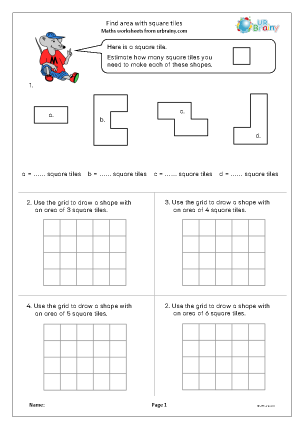
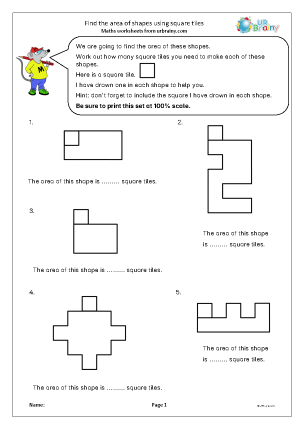
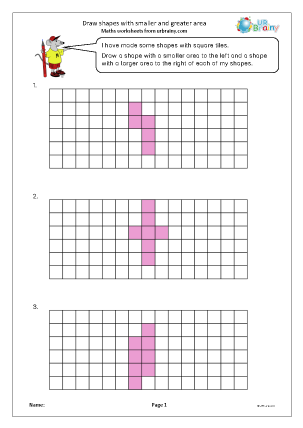
Perimeter and area




Measuring mass and capacity


Measuring time




Revise money


Money


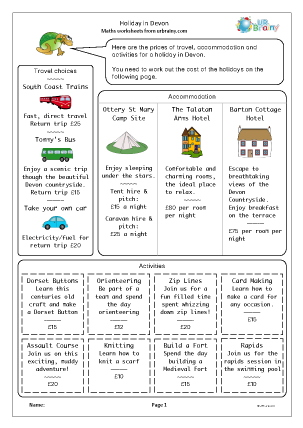
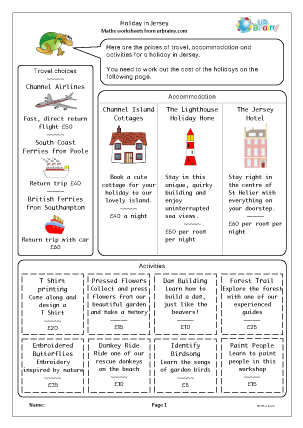
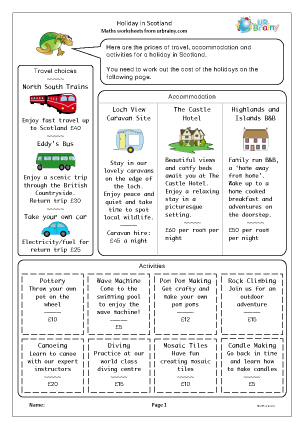
Measuring temperature


Subscribe to our newsletter
The latest news, articles, and resources, sent to your inbox weekly.


© Copyright 2011 - 2026 Route One Network Ltd. - URBrainy.com 14.0.37