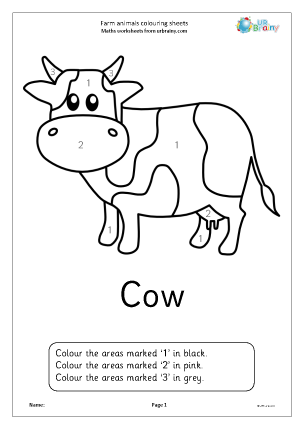
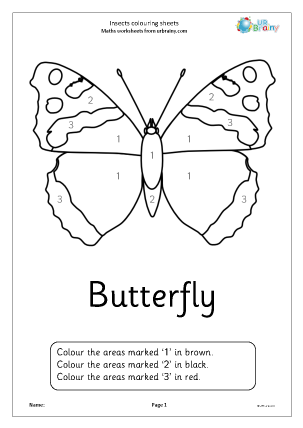
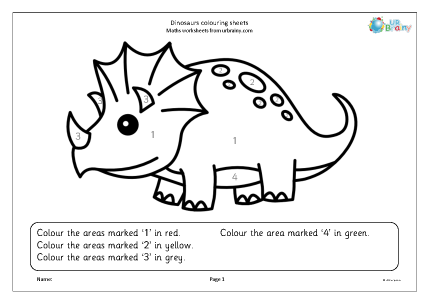
Know that numbers identify how many objects are in a set. Count up to 5 everyday objects.
The very earliest work with number is incredibly important and here we have a set of worksheets which helps with recognising the numbers from 1 to 5. You will need a set of crayons so that the leaves can be coloured correctly.
The very earliest work with number is incredibly important and here we have a set of worksheets which helps with recognising the numbers from 1 to 5. You will need a set of crayons so that the apples can be coloured correctly.
The very earliest work with number is incredibly important and here we have another set of worksheets which helps with recognising the numbers from 1 to 5. You will need a set of crayons so that the baby chicks can be coloured correctly.
The early bird catches the worm – but only one! An important aspect of developing an understanding of number is to be able to match one set of objects to another set which has an equal number. We have 12 great pages for you to choose from, including these fun, matching birds and worms pages.
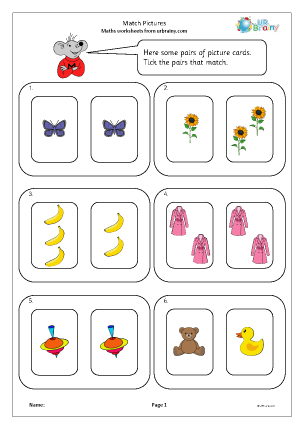
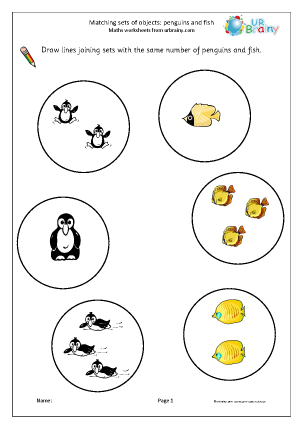
An important aspect of developing an understanding of number is to be able to match one set of objects to another set which has an equal number. We have 12 great pages for you to choose from, including these fun, matching penguins to the same number of fish.
Is there a kennel for every dog? An important aspect of developing an understanding of number is to be able to match one set of objects to another set which has an equal number. We have 12 great pages for you to choose from, including these fun, matching dogs and kennels pages.
Our first introduction to the idea of a number line and being able to match a set of objects to a number. Count the fruit in the circle and draw a line to the correct number. This involves both counting and recognising numbers. At this early stage all numbers are kept to 5 or below.
Our first introduction to the idea of a number line and being able to match a set of objects to a number. Count the ducks in the circle and draw a line to the correct number. This involves both counting and recognising numbers. At this early stage all numbers are kept to 5 or below. Why not go down to your local pond and count the ducks there?
Our first introduction to the idea of a number line and being able to match a set of objects to a number. Count the farm animals in the circle and draw a line to the correct number. This involves both counting and recognising numbers. At this early stage all numbers are kept to 5 or below. There are usually too many cows to count in a field, but if you have a toy farm at home it can be great fun counting and moving the animals around.
Our first introduction to the idea of a number line and being able to match a set of objects to a number. Count the cheeky monkeys and gorillas in the circle and draw a line to the correct number. This involves both counting and recognising numbers. At this early stage all numbers are kept to 5 or below.
Just starting off with maths? Witches hats and Viking helmets help with matching a set of objects to a number. Count the hats in the circle and draw a line to the correct number. This involves both counting and recognising numbers and includes zero. At this early stage all numbers are kept to 5 or below.
Just starting off with maths? Here are some worksheets on being able to match a set of objects to a number. Count the butterflies in the circle and draw a line to the correct number. This involves both counting and recognising numbers and includes zero. At this early stage all numbers are kept to 5 or below. If it's sumer see if you can count how many butterflies are in the garden.
Just starting off with maths? Here are some worksheets on being able to match a set of objects to a number. Count the rabbits in the circle and draw a line to the correct number. This involves both counting and recognising numbers. At this early stage all numbers are kept to 5 or below.
A bat is not much use if you haven't got a ball. There are plenty of opportunities to match sets of objects around the house, but it is also useful to sit down and have a go on paper. Here is a great set of four pages which ask children to count two sets of bats and balls and then draw more to make them equal.
Do your socks go missing in the wash? There are plenty of opportunities to match sets of objects around the house, but it is also useful to sit down and have a go on paper. Here is a great set of four pages which ask children to count two sets of shoes and socks and then draw more to make them equal.
Have you got the right number of spoons for all those delicious ice creams? There are plenty of opportunities to match sets of objects around the house, but it is also useful to sit down and have a go on paper. Here is a lovely set of four pages which ask children to count two sets and then draw more to make them equal.