or Register
Register Now

Shape and Measures Maths Worksheets For Later Reception (age 4-5)

Matching 3D shapes and using comparisons such as thicker and thinner, bigger and smaller to measure.

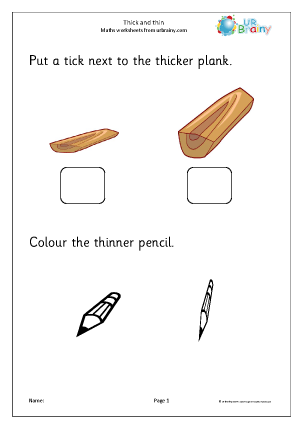
Thick and thin

Early measurement is all about comparisons. Here we compare thicknesses. Maths vocabulary: thick, thicker, thickest.

Thick and thin
View
4 pages

Matching 3D Shape

Matching 3D shapes which are the same: an important start to shape recognition.

Matching 3D Shape
View
4 pages

Matching 3D shapes (2)

Further work on matching and comparing simple 3D shapes.

Matching 3D shapes (2)
View
4 pages

Bigger

These great pages will help your child begin to understand measurement and compare the size of objects. Standard units of measurement such as centimetres are not introduced until much later so we begin with simple comparisons of size, using the term 'bigger'.

Bigger
View
4 pages

Bigger biggest

Learning the correct terms to compare things is vital in the Early Years and one of the most important aspects of measurement. Here we have four more great pages on maths vocabulary for young children, looking at bigger and biggest. You can find these in our Shapes and Measures section. Pick out the biggest frog and find the bigger boot! Talk about the pictures and use the terms as often as possible around the home.

Bigger biggest
View
4 pages

Smaller

Whether it’s spoons, teddies or balloons, there’s plenty of opportunity to work out ‘What’s smaller’. This is another great set of pages introducing measurement to young children. To start with standard units are not used, but it is very important to get children to compare two things, saying which is bigger, smaller, heavier etc.

Smaller
View
4 pages

Long and Short

Beginning measurement by comparing length, using the terms long and short

Long and Short
View
4 pages

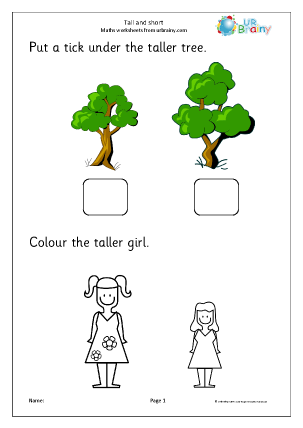
Tall and short

Four pages on maths vocabulary of measurement: tall, taller and tallest as well as shorter.

Tall and short
View
4 pages

Empty or Full?

Whether it is bath water or a jar of sweets, the terms empty and full are very important when talking about capacity.

Empty or Full?
View
4 pages

On, above and under

Learning the vocabulary of position, including on, above and under.

On, above and under
View
4 pages